
The Green Wedding Blueprint:A Bride’s Guide to Eco-Conscious Print Design
1. Introduction: The High Cost of "I Do" on the Environment
Planning a wedding is a celebration of a beautiful future, yet the traditional paper trail left behind by the industry is staggering. Currently, an estimated 60% of landfill waste is comprised of paper and printing materials. When you consider the sheer volume of save-the-dates, invitations, programs, and thank-you notes generated for a single day, the environmental footprint is immense.
Choosing eco-friendly print isn't just a trend; it is a direct intervention in landfill growth. As a Master Sustainable Print Strategist, I can assure you that "going green" does not require sacrificing luxury or inflating your budget. In fact, by leveraging industrial bulk-buying power and smart design logistics, eco-friendly printing is often more cost-effective than traditional methods.
Curating a sustainable wedding suite allows you to announce your union with elegance while protecting the planet your new family will inherit.
2. The 40% Rule: How Dimensions Defeat Waste
The most common mistake in wedding design is the "Designer Trap." Most paper mills produce massive standard sheets, typically 25x38 inches or 23x35 inches. When a designer selects a "unique" size, like the 7x10 inch "Hallmark" standard, they often force 40% to 50% of that mill sheet into the trash.
The secret to a sustainable wedding is maximizing "yield." By making a slight dimensional change, you can double the number of cards cut from a single sheet, effectively cutting your paper waste and your costs in half. For digital printing, we focus on the 13x19 inch press sheet. If you choose a 9x6.25 inch flat card (which folds to an A6), you get double the yield compared to the wasteful 10x7 inch traditional size.
Have Your Cake and Eat It Too!
Sustainable/Efficient Sizes vs. Traditional Wasteful Sizes
Product Type | Traditional/Wasteful Size | Sustainable/Efficient Alternative
Greeting/Invites | 10" x 7" (The "Hallmark" Trap) | 9" x 6.25" (Hero Size: A6)
Small Invites | Custom Designer Sizes | 5.5" x 8.5" (Standard A2 Yield)
Postcards | 5" x 7" (Only 4-up per sheet) | 4" x 6" (8-up per sheet)
Brochures | 7" x 10" | 8.5" x 11" (Standard Mill Increment)
While size dictates efficiency, the hidden chemistry of your paper defines its true environmental legacy.
3. Decoding Paper Specs: PCW, PCF, and the Chlorine Danger
To design with a clean conscience, you must understand the "spec sheet" of your materials. Many brides worry that recycled paper looks "dingy" or "brown," but this is a myth. High-quality sustainable paper is indistinguishable from virgin stock.
PCW (Post-Consumer Waste): This is paper that has actually reached the consumer and been returned to the recycling stream. Always insist on 100% PCW.
PCF (Process Chlorine Free): 100% PCW paper is bleached with oxygen or hydrogen peroxide rather than chlorine. This is vital because chlorine bleaching creates dioxins, toxic chemicals that poison our waterways, wildlife, and ourselves. Because of this oxygen-based process, 100% PCW can be just as bright white as any traditional paper.
FSC (Forest Stewardship Council): This ensures mills manage forests responsibly, but beware: virgin paper can still be FSC certified. Always prioritize PCW content first.
The "7 Generations" Legacy
By choosing 100% PCW, you are participating in a beautiful circular economy:
A) Life Cycles: Paper fibers can be recycled approximately seven times before they become too short for manufacturing.
B) Screening: Only the sturdiest fibers are kept in the batch, ensuring your invitations feel premium.
C) Return to Earth: Because PCW paper lacks plastic coatings and toxic bleach, it remains fully biodegradable and compostable.
4. The Sustainable Wedding Suite: From Bachelorette to Honeymoon
Once you've mastered the chemistry, you can select textures that define your wedding's first impression without the environmental cost.
The Announcement and Invitations
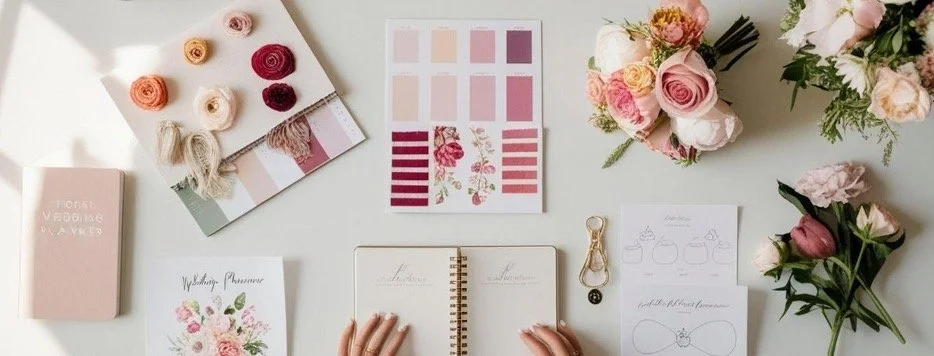
For a luxury, archival feel, look for 100% PCW "felt" or "linen" finishes. These offer a rich, tactile "bumpy" texture that screams elegance. By sticking to the A6 hero size (4.5 x 6.25), you ensure maximum sheet yield and minimum waste.
The Bachelorette and Party Decor
Skip the plastic-based vinyl banners. Instead, choose fabric or cotton banners. They are plastic-free, durable enough for outdoor use, and provide a sophisticated, soft-touch aesthetic for your pre-wedding celebrations.
The Ceremony and Reception
Introduce "Seed Paper" for your place cards or favors. This 100% PCW stock has wildflower seeds embedded in the fibers. High-profile clients like the NFL (Monday Night Football) and Patagonia use these materials to prove luxury and performance. Guests can plant your place cards to grow a living memory of your day.
Pro Tip: Seed paper is premium-priced. Use a small star or circle of seed paper attached to recycled cardstock to keep costs low while maintaining the impact.

The Gifts and Favors
For candle or bottle favors, utilize 100% recycled boxes in a sturdy 24pt thickness.
For labeling, choose TerraSkin (Rock/Mineral Labels). Made from limestone and minerals, these are the only eco-friendly, plastic-free alternatives to vinyl that are completely waterproof and tear-resistant.
The Memories
Traditional hardcover albums are expensive and resource-heavy. Instead, design a softcover book on 16pt heavy recycled stock.
Utilizing "velvet" or "silk" finishes allows the ink to sit on top of the sheet for vibrant, popping colors.
This was the strategy used by Twigs, a greeting card company that saw a 400% sales increase during the pandemic because their recycled products looked and felt so high-end.
5. Inks and Toners: The "Soy" Myth vs. Non-Toxic Truths
The ink on your invitations is as important as the paper beneath it.
The Soy Myth: Many printers market "Soy Ink," but this is often only 14% soy and 86% petroleum-based oil. It is an improvement, but it is not 100% natural.
Non-Toxic Toners: Digital printing uses 100% non-toxic toners. These contain zero petroleum and are the cleanest option for smaller wedding runs.
To maximize your budget, follow the "Economic Tipping Point":
Choose Digital: For runs under 500 sheets (most weddings). It is cheaper for small quantities and uses 100% non-toxic toner.
Choose Offset: Only for massive orders (1,000+) where the high startup costs can be amortized across a high volume of sheets.
6. The Printer Checklist: Preparing Files for the Eco-Printer
The most sustainable print job is the one you only have to print once. Avoid the waste of re-prints by ensuring your designer understands these technical requirements:
High-Resolution PDFs: All files must be 300 DPI. Web-standard 72 DPI files will look blurry and lead to wasted paper.
1/8 Inch Bleeds: Include a 0.125-inch bleed on all four sides. This ensures the design hits the very edge of the paper after cutting.
Crop Marks: Yes. We accept AI, InDesign, and Canva files.
Native Files: Always provide the "Native Files" (InDesign or Illustrator) alongside the PDF. This allows for minor technical corrections without the delay of a full re-submission.
Avoid Metallic Inks: These contain heavy metals that prevent the paper from being truly eco-friendly. Use CMYK digital colors instead; modern digital presses can now match 85-90% of Pantone colors with zero toxicity.
By hunkering down on these design details, you ensure your celebration reflects your values. Choosing resource efficiency allows you to celebrate your future together while actively protecting the planet's future.
You Can Have Your Cake and Eat It Too!
If you are not a designer, EcoFriendly Weddings and Events offers an environmentally friendly selection of Wedding and Event options for your special celebrations! You can order directly from our Etsy site, and we take care of the rest.